Skip to content
Prime Minister’s Research Fellow

Shachee Swaraj

Research Scholar

Ph.D. Research Scholar, Department of Microbiology & Cell Biology, IISc Bengaluru.

Prime Minister's Research Fellow exploring broad-spectrum, interferon-independent antiviral innate immunity.

Core Focus

Investigating interferon-independent antiviral innate immunity, IRF3 stability, and rapid host defense strategies against Influenza A, Zika, Dengue, HSV-1, HIV, and SARS-CoV-2.

Shachee Swaraj portrait

Location

Bengaluru, India

Contact

shachees@iisc.ac.in

Research Objective

Broad-spectrum antivirals independent of classical IFN signaling.

Skills & Expertise

Research, leadership, teaching
Viral Immunology
Antiviral Innate Immunity
CRISPR Screening
Molecular Biology
Protein Stability
Flow Cytometry
Fluorescence Microscopy
Data Analysis
Scientific Writing
Teaching & Mentorship

Leadership & Achievements

Highlights from shachee.in

Treasurer of the MCB Society (2020-2021).

Winner of 'Face of The University' competition in College Fest Aahvan 2019.

Student Council Member; Captain of Nehru Club, Notre Dame School, Gumla.

Winner of inter-house science exhibitions and multiple academic event accolades.

Winner of Creative Writing in English, debates, group discussions, and Rangoli.

Winner of inter-school group dance competitions (folk, cultural, patriotic).

Winner of 'One Act Plays' for three consecutive years.

Extempore speeches and elocutions; keen singer and dancer (semi-classical, freestyle, Bhangra).

Ukulele and musical performance enthusiast.

Research

View all
Dr. Shashank Tripathi portrait

Research Supervisor

Dr. Shashank Tripathi

Wellcome Trust India Alliance Intermediate Fellow

Department of Microbiology & Cell Biology, Centre for Infectious Disease Research, IISc Bengaluru

Research supervisor guiding work on interferon-independent antiviral innate immunity across a broad panel of human viruses.

Learn more

Projects

IRF3 stability & IFN-independent antivirals
IRF3 Stability in Antiviral Response cover

IRF3 Stability in Antiviral Response

2024-03-01

Dr. Shashank Tripathi portrait

Supervised by Dr. Shashank Tripathi

Wellcome Trust India Alliance Intermediate Fellow

More details

Dissecting IRF3 stability, interactions, and negative regulation to balance IFN-beta driven antiviral immunity.

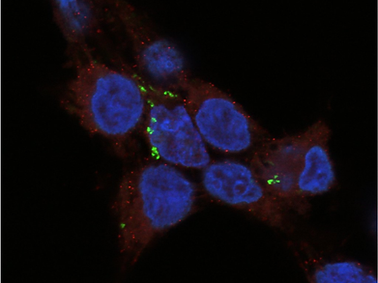
  • Mapped IRF3 degradation via proteasomal and autophagy pathways; rescued IRF3 using pathway-specific inhibitors and quantified rescue by western blot, FACS, and fluorescence microscopy.
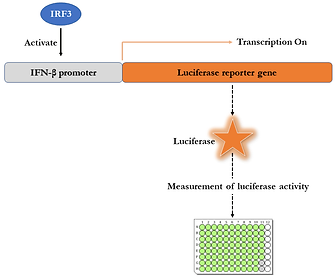
  • Identified triggering factors for IRF3 degradation and evaluated downstream IFN-beta promoter activity using Renilla-Firefly dual-luciferase reporter assays.
IRF3Innate ImmunityProteostasis
IFN-Independent Broad-Spectrum Antivirals cover

IFN-Independent Broad-Spectrum Antivirals

2024-06-01
Dr. Shashank Tripathi portrait

Supervised by Dr. Shashank Tripathi

Wellcome Trust India Alliance Intermediate Fellow

More details

Characterizing rapid antiviral mechanisms that bypass classical interferon signaling.

  • Demonstrated IRF-driven induction of antiviral ISGs in IFN-signaling deficient systems, enabling rapid, IFN-independent antiviral responses.
  • Generated STAT1 knockout A549 and HEK-293T cells; validated via immunoblot and RT-PCR of ISGs (ISG54, ISG56) post IFN treatment.
CRISPR KOTranscriptomicsVirus Reporter Panel

PMRF Annual Reviews

PMRF Annual Review — Broad Spectrum IFN-Independent Antiviral Innate Immunity

PMRF Annual Review

PMRF Annual Review — Broad Spectrum IFN-Independent Antiviral Innate Immunity

Characterization of broad spectrum, IFN signaling-independent antiviral innate immunity in mammalian cells.

Objectives

  • Understand regulation of IRF3 stability and function by cellular and viral factors.
  • Identify and characterize IRF3-dependent, IFN signaling-independent antiviral factors.
  • Delineate IRF3-mediated transcription of antiviral genes in an IFN-independent manner.

Significance: Reveals new biology of mammalian antiviral immune response and paves the way for broad-spectrum antivirals and improved vaccination strategies.

Work updates

  • Showed IRF3 is targeted by proteasomal and autophagosome pathways; rescued IRF3 using pathway-specific inhibitors and quantified via western blot (SDS-PAGE), FACS, and fluorescence microscopy.
  • Identified triggers for IRF3 degradation; measured effects on IFN-β promoter activity using Renilla-Firefly dual-luciferase assays.

Review Results: Overall Grade: Advanced to Next Scale. Remarks: Well-designed work; suggested stable, low-expression endogenous models for degradation studies.

PMRF Annual Review 2022 — IRF3 Degradation & IFN-Independent Antivirals

PMRF Annual Review

PMRF Annual Review 2022 — IRF3 Degradation & IFN-Independent Antivirals

Deepening analysis of IFN-independent antiviral mechanisms and IRF3 stability.

Work updates

  • Validated findings at endogenous IRF3 levels in HEK-293T and A549 stimulated with Poly I:C and/or SeV; assessed IRF3/pIRF3 with drug treatments.
  • Mapped IRF3 ubiquitination/polyubiquitination and lysine roles (IRF3-5D mutants) via alanine scanning; explored ubiquitin linkages affecting stability.
  • Cloned IRF3 with 2x C-term Strep tag; purified for Orbitrap Fusion MS interactome analysis.
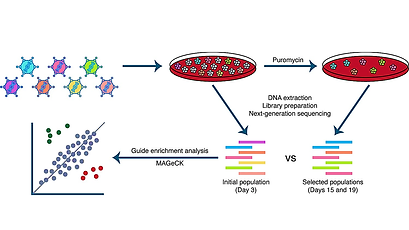
  • Built genome-wide CRISPR KO HEK-293T library; sorted IRF3-GFP high populations (n=3) for sequencing to identify degradation regulators.
  • Generated STAT1 knockout A549/HEK-293T; validated via immunoblot and ISG RT-PCR after IFN. Cloned gRNAs for STAT2, IRF7, IRF9, IRF1 for single/double KOs.
  • Preparing lentiviral constructs of IRF3-dependent, IFN-independent antiviral genes; reporter virus panel built and titrated for functional testing.

Review Results: Review Comment May 2022: Recommended with commendation. Note: Validation in STAT1/STAT2 knockout models advised.

Let’s collaborate

Looking forward to hearing from you. I am excited to discuss research collaborations, opportunities, and speaking engagements.

Email: shachees@iisc.ac.in

Phone: +91-9113141916